 This year has been a big one. My father fell ill and passed away over the summer. I had the arduous task of cleaning out what essentially was a ‘hoard’ and moving some of those items into my home. I felt the weight of those items as they took over my study and the garage. I routinely kept the door closed to the study and avoided the garage; out of sight, out of mind. However, I had to acknowledge that ignorance is not dealing. And… I. Had. To. Deal. Over the course of the last few months, I started purging items. My free days were filled with trips to Goodwill, trips to the dump, old photos, boxes of paperwork and occasionally tears. My parents tended to have too much stuff and I operate under the ‘less is more’ belief system. I decided to go beyond clearing out the remnants of my parent’s lives, I moved on to my things as well. As I rid myself of things that occupied space, but ultimately didn’t add anything to my life, I felt my home becoming more and more my home with each cleared box.
The weekend before Christmas, I was really enjoying my cleaned, organized, minimalistic home. Things were so cleaned out and organized that I set up a gift wrapping station, turned on some music and tended to the presents. But true nesting didn’t occur until I had something cooking in the kitchen. In between wrapping gifts, I browned 6 pounds of short ribs to start their 3 hour braise. The routine, the order of cooking was a sign to me that my life, although slightly different, and my home had been restored. And those short ribs never tasted better.
Braised Short Ribs
- 6 pounds of bone-in short ribs
- Salt
- Olive oil
- 1 large sweet onion, cut into ½ inch pieces
- 2 ribs celery, cut into ½ inch pieces
- 3 peeled carrots, cut into ½ inch pieces
- 10-12 garlic cloves
- 1 ½ cups (12 ounces) tomato paste
- 2-3 cups of hearty red wine (I tend to use a ratio of 3 parts red wine, 1 part port)
- 2-3 cups of water
- 1 bunch of thyme tied with kitchen string
- 2 bay leaves
Generously season each short rib with salt. Coat a large Dutch oven with olive oil and bring to a high heat. Add the short ribs to the pan and brown very well, about 2 to 3 minutes per side. Do not overcrowd the pan. You may need to cook in batches; remove ribs if need be to a plate until you have finished browning them all.
While the short ribs are browning, puree all the vegetables and garlic in the food processor until it forms a coarse paste. When the ribs are all very brown, remove them all from the pan. Leave a small amount of oil in the pan and add the pureed vegetables. Season with salt and brown them until they darken and from a crust on the bottom of the pan; approximately 5-7 minutes. (Onions often hold a good amount of water and this water may hinder the browning. If this is the case, add a teaspoon of sugar during the browning to aid in caramelizing the vegetables.) To assist in the browning, scrape the crust and redistribute to insure even browning. Add the tomato paste to the vegetables and brown paste mixture for 4-5 minutes. Add the wine/port and scrape the bottom of the pan to deglaze all the bits. Lower the heat to avoid burning the mixture and reduce it by half.
Return the short ribs to the pan and add 2 cups of water or more until the ribs are just covered. Add the thyme and bay leaves. Cover with a lid or tightly secured foil and place in the oven for 3 hours. Check the ribs during the cooking time to ensure that the ribs remain under liquid; add water if necessary. Turn the ribs over halfway through the 3 hours. During the last 30 minutes, remove the lid to release moisture, thicken the braising liquid and encourage additional browning.Remove the pan from the oven and taste the braising liquid. If necessary, adjust the flavor by adding additional salt and/or sugar to balance out any acidity that may occur when tomatoes are included in a recipe.
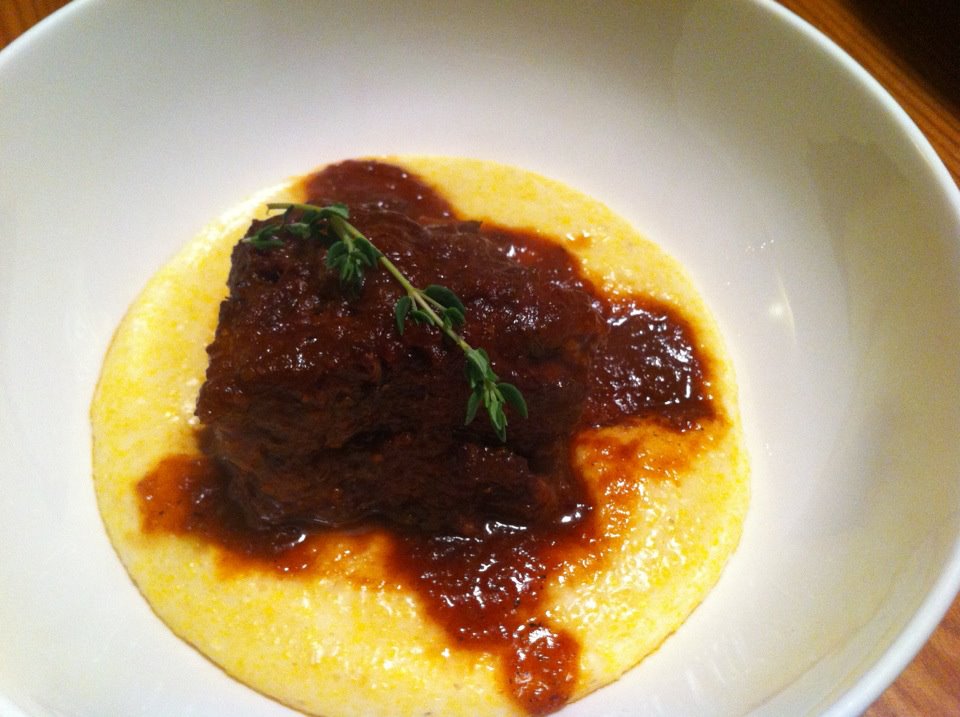
I prefer to serve my short ribs over a basic soft polenta. They would also pair well with mashed potatoes or buttered egg noodles.


 Good Food